
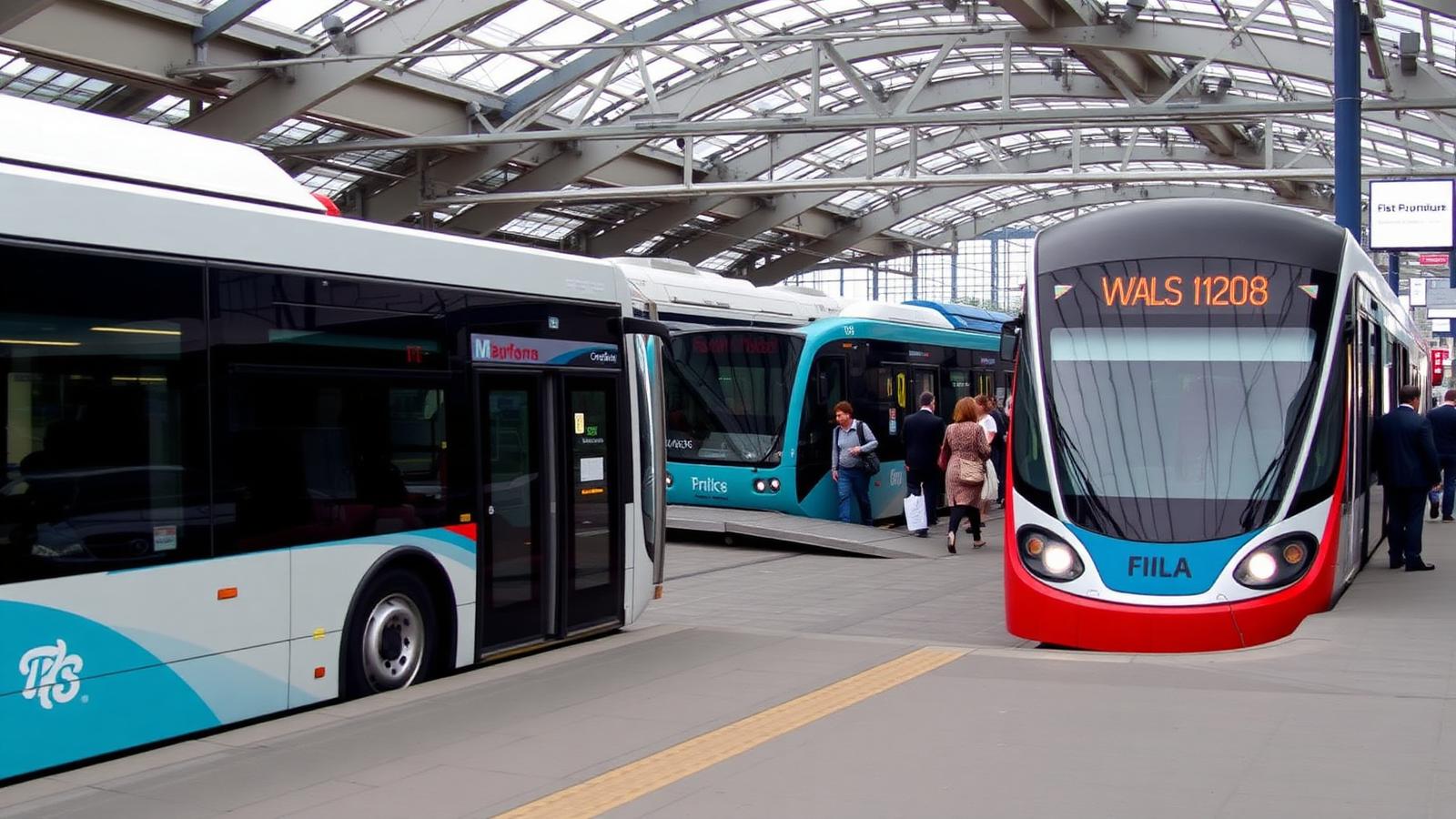
Your semester fee probably already pays for your local transport
Most German universities bundle a Semesterticket into the Semesterbeitrag (semester contribution) you pay at enrolment — check this before buying anything else. Figures below are approximate (€1 ≈ ৳142) and change often — verify with your Studierendenwerk and local transport authority (Verkehrsverbund).
The Semesterticket — check what your university includes before paying twice
Many German universities negotiate a flat-rate transport deal with the local Verkehrsverbund (transport association) and fold it into your compulsory semester fee.
If your Semesterbeitrag includes a Semesterticket, it usually covers unlimited local and regional transport (buses, trams, U-Bahn/S-Bahn, and often regional trains) within your city and surrounding region for the entire semester — sometimes across the whole federal state. This varies enormously: some universities (Aachen, many NRW universities) include very generous state-wide tickets, while others include a smaller city-only pass or nothing at all. Check your university's Studierendenwerk or AStA (student union) website the moment you enrol — if it's included, do not separately buy a Deutschlandticket for the same coverage, you'd be paying twice.
The Deutschlandticket — nationwide local transport for one flat price
Introduced in 2023, the Deutschlandticket lets you use almost all local and regional public transport anywhere in Germany for one monthly price.
The Deutschlandticket costs roughly €58/month as of the most recent pricing round (it started at €49 and has risen since — always verify the current price on deutschlandticket.de or bahn.de before budgeting). It covers buses, trams, U-Bahn, S-Bahn and regional trains (RE/RB, not ICE/IC long-distance trains) across the entire country, is cancellable monthly, and many universities now offer a discounted student version (Deutschlandsemesterticket) through their Studierendenwerk at a lower price than the standard rate — ask about this specifically, since it's often cheaper than a standalone Semesterticket alone once you factor in nationwide coverage for weekend trips.
BahnCard 25 and 50 — worth it if you travel intercity often
For trips beyond your Deutschlandticket's regional-train coverage — long-distance ICE/IC journeys between cities — a BahnCard can pay for itself quickly.
| Card | What it does | Rough annual cost (verify) | Worth it if... |
|---|---|---|---|
| BahnCard 25 | 25% off most Deutsche Bahn fares | ≈ €59/year (student rate lower) | You take a handful of ICE/IC trips per year, e.g. visiting friends in other cities |
| BahnCard 50 | 50% off most Deutsche Bahn fares | ≈ €244/year (student rate roughly half) | You travel intercity by train most months — the discount alone can cover the annual fee within 2–4 return trips |
| No BahnCard | Full fare, or book early Sparpreis tickets instead | €0 | You travel intercity rarely and can plan ahead for cheap advance fares |
Do the maths on your own travel pattern: a BahnCard 50 pays for itself once your discount savings exceed the annual card price, which for a student travelling home to visit family or friends every month or two in Germany can be well within the first semester. Students under 27 get a meaningfully discounted BahnCard rate — check bahn.de for the current student price before deciding.
DB regional trains vs ICE — know which ticket you actually need
Your Deutschlandticket and Semesterticket only cover regional trains, not the fast long-distance network.
RE/RB regional trains are slower but included in the Deutschlandticket and most Semestertickets — fine for trips within your state or to a neighbouring city, just slower. ICE/IC long-distance trains are faster but always need a separate ticket, priced either as a flexible fare or a much cheaper advance-purchase Sparpreis fare (book as early as possible, prices rise closer to travel date). For a Dhaka-budget student, a good rule is: use regional trains covered by your ticket whenever the extra time is tolerable, and reserve ICE tickets for when you genuinely need the speed or can lock in a cheap Sparpreis fare weeks ahead.
Flixbus — the budget option for longer trips
Green Flixbus coaches connect almost every German city and many neighbouring countries at prices well below ICE fares.
Flixbus is usually the cheapest way to travel between major German cities or to nearby countries (Poland, Netherlands, Czechia, Austria) if you book a few weeks ahead — often €10–25 for journeys that would cost €40–80+ by train. It takes longer than the train, but for a student budgeting in taka, it's a reliable way to visit friends or explore Europe on breaks without touching your blocked account funds.
Cycling — genuinely practical in most German university towns
Germany is one of the most bike-friendly countries in Europe: dedicated cycle lanes are standard in most cities, and university towns like Münster, Freiburg, Aachen and Karlsruhe are built around cycling. A decent secondhand bike (check Kleinanzeigen, the German classifieds app, or your Studierendenwerk's bike market at semester start) typically costs €80–200 and pays for itself within a few months versus even the Deutschlandticket. German law requires working lights front and back after dark, and cycling helmets, while not legally required for adults, are strongly advisable given real winter road conditions.
- 1
Check what your Semesterbeitrag already includes
Ask your Studierendenwerk or read your enrolment confirmation carefully — most include some form of local transport ticket.
- 2
Decide if you need a Deutschlandticket on top
Only worth it separately if your Semesterticket doesn't cover the areas you need, or your university doesn't include one at all.
- 3
Do the BahnCard maths against your realistic travel plans
Skip it if you'll rarely leave your city; get one if you're already planning monthly intercity trips.
- 4
Buy or find a secondhand bike
Check your Studierendenwerk's start-of-semester bike sale and Kleinanzeigen for cheap, reliable options.
Schwarzfahren (fare dodging) is taken seriously
Verify current prices before budgeting
Want this decided for you, not just explained?
Your personalised blueprint picks the exact course, university, city and PR route for your grades, budget and career — with every cost in taka. From ৳390 for one full assessment.
Related Germany guides
Read these next — universities, courses, cities and the residence route all feed into the same decision.
Best 10 German universities — and why the FH may beat the TU
TU Munich, RWTH Aachen, KIT, TU Berlin and the applied-science universities: entry bars, uni-assist, semester fees and job outcomes.
Before you choose · 9 minCourse list by tier — Blue Card winners vs dead ends
Which German master's lead straight to a shortage-occupation job offer, which are safe second choices, and which waste two years.
Before you choose · 9 minBest 5 German cities for Bangladeshi students
Munich, Berlin, Aachen, Stuttgart and Leipzig compared on rent, Werkstudent pay, graduate jobs and how much German you really need.
Before you choose · 11 min18-month job-seeking permit, EU Blue Card and settlement
How §16b study, the 18-month post-study permit, Blue Card salary thresholds and the 21-month settlement route actually connect.
After you land · 9 minFinding a room in Germany — Studentenwerk, WG and Anmeldung
Dorm waiting lists, WG-Gesucht tactics, Kaution and Schufa, Anmeldebestätigung traps and how to avoid the classic transfer scam.
After you land · 8 minLegal student work — 140 days, Werkstudent and Minijob
The 140 full / 280 half day rule, Minijob vs Werkstudent, real hourly pay, tax classes and why a HiWi job changes your career.