
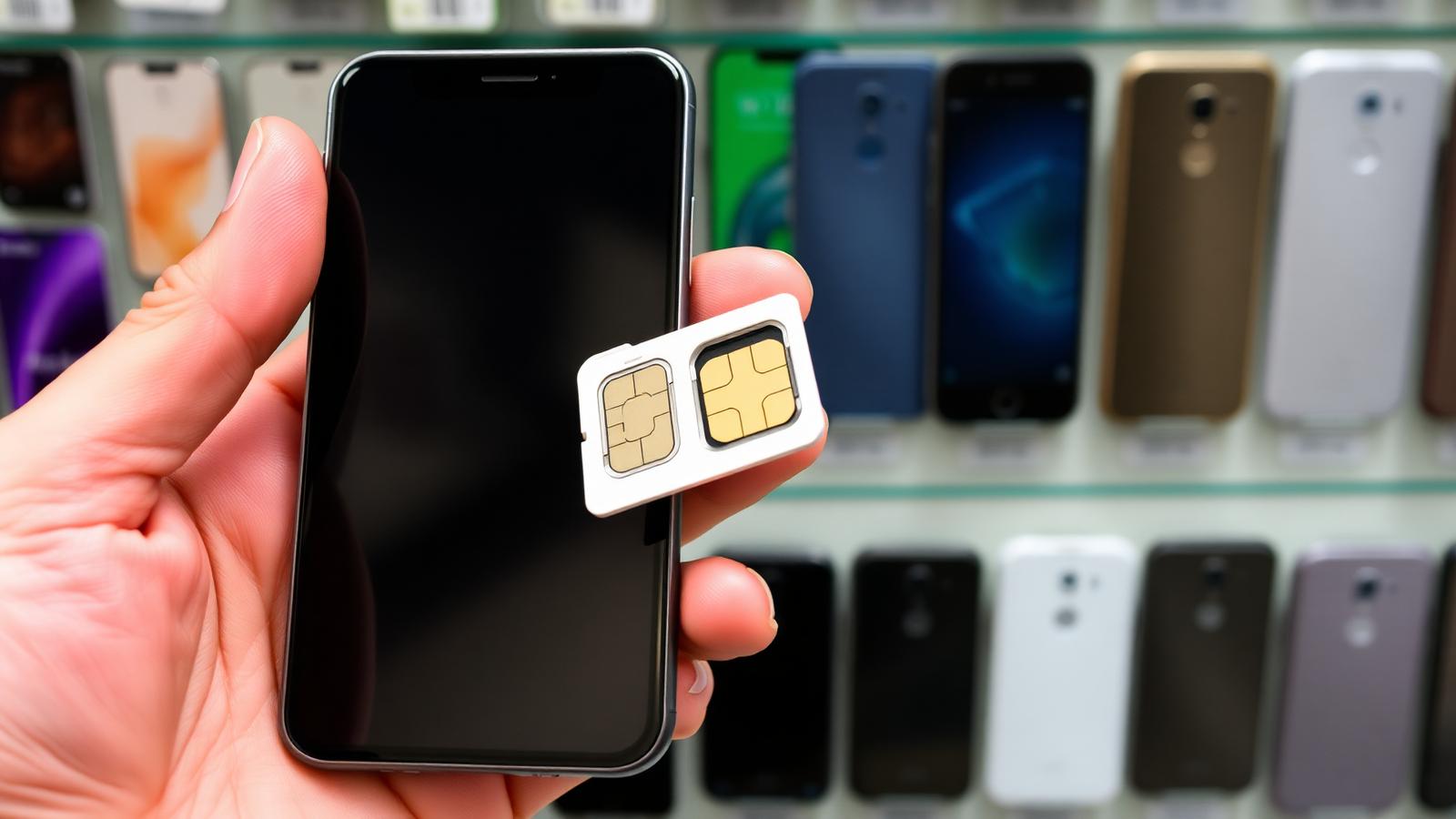
Every Malaysian SIM must be registered with your passport — MCMC rules, no exceptions
Malaysia has mandated SIM registration since 2017 under rules enforced by the Malaysian Communications and Multimedia Commission (MCMC), so you cannot activate any prepaid SIM — physical or eSIM — without presenting your passport at the point of registration. Prices below are approximate at roughly 1 RM ≈ ৳29 and change frequently — verify current plans directly with each carrier before buying.
Mandatory SIM registration with your passport — the MCMC rule
Under MCMC regulations, every prepaid SIM sold in Malaysia must be registered to a verified identity before activation, and this applies equally to Malaysians and foreigners.
When you buy a prepaid SIM at a Hotlink, CelcomDigi, U Mobile, Yes or Tune Talk outlet, kiosk, or authorised retailer, staff are legally required to register your identity — for international students this means your passport, and often a photo taken on the spot plus your Student Pass or i-Kad once issued. An unregistered SIM will not activate, and MCMC audits registration compliance regularly, so don't expect any outlet to skip this step for convenience. Bring your physical passport (not a photo of it) when buying your first SIM, and expect the registration process to take 10–20 minutes at a proper retail outlet, less at some airport kiosks with streamlined onboarding for arriving travellers.
Hotlink, CelcomDigi, U Mobile, Yes and Tune Talk — how they compare
Malaysia has five major prepaid brands worth knowing, spanning genuinely separate network infrastructure and value-focused MVNOs.
| Carrier | Positioning | Approx. prepaid (verify) | Notes |
|---|---|---|---|
| Hotlink (Maxis) | Strong network quality, popular default | ≈ RM 30–50/mo for 20–40GB | Widely regarded as having the most consistent coverage in KL and major cities — a common first choice for international students |
| CelcomDigi (merged Celcom + Digi) | Broad national coverage, competitive data bundles | ≈ RM 30–45/mo for 20–35GB | Now Malaysia's largest network by subscriber base post-merger; good all-round coverage including many university towns |
| U Mobile | Aggressive data pricing | ≈ RM 25–40/mo for 25–50GB | Often the best value per GB, especially for students; network strongest in urban areas |
| Yes (part of U Mobile group) | Simple unlimited-style data plans | ≈ RM 20–35/mo | Historically known for unlimited or high-cap data plans at low prices — check current terms since offerings are periodically restructured |
| Tune Talk | Budget MVNO riding on Celcom's network | ≈ RM 15–30/mo | Cheapest entry point for basic calls/SMS/data; fine as a backup or low-usage line |
Coverage quality varies by exact location more than brand reputation alone — ask other students at your specific university or in your specific neighbourhood which carrier actually performs best there, since building coverage inside some condos and campus buildings can vary noticeably between networks even in the same city.
eSIM at KLIA — connected the moment you land
Kuala Lumpur International Airport (KLIA/klia2) has multiple telco counters and eSIM/physical SIM kiosks specifically set up for arriving international travellers.
If your phone supports eSIM, you can buy a Malaysia-specific or regional travel eSIM before you fly (via Airalo, Holafly or similar marketplaces) and land already connected for maps, WhatsApp and ride-hailing apps — genuinely useful for your first exhausting day before you've registered a proper local SIM. Alternatively, Hotlink, CelcomDigi and U Mobile all operate counters inside KLIA/klia2 arrivals specifically for new arrivals, often with a simplified on-the-spot registration process using your passport, letting you walk out with a working local number within minutes. Either route works — the airport-counter physical SIM is usually cheaper for a full month's plan, while a pre-bought eSIM is more convenient if you land at odd hours when counters may be quieter or queues longer.
Data plan pricing and what's realistic for a student
Most Bangladeshi students settle into a mid-tier prepaid plan once they understand their actual data usage pattern (heavy video-calling home vs light messaging-only use).
A typical student plan in the RM 30–50/month range (≈ ৳870–1,450) with 20–40GB of data comfortably covers daily navigation, messaging, video calls to family in Bangladesh over WhatsApp/IMO, and moderate streaming. Heavy streamers or students without home wifi (relying entirely on mobile data) should look at U Mobile or Yes plans specifically, since they tend to offer the highest data-per-ringgit among the major carriers — but always check current promotions rather than assuming last year's pricing still holds, since Malaysian carriers run frequent limited-time data-bundle promotions.
International calling to Bangladesh
Data-based calling covers almost all everyday contact with family, exactly as it does everywhere else.
WhatsApp, IMO and Messenger handle the vast majority of voice and video calls to Bangladesh over wifi or mobile data at no extra cost beyond your regular data plan. For calling Bangladeshi landlines or non-smartphone numbers, most Malaysian carriers offer discounted international call add-on packs — check Hotlink, CelcomDigi and U Mobile's app for a Bangladesh- specific or general international-minutes bundle, since the standard per-minute international rate without an add-on is significantly more expensive.
Postpaid plans once you have an i-Kad
Postpaid contracts in Malaysia typically require stronger proof of local status than a tourist or newly arrived student can usually provide, but become accessible once you're properly settled.
- 1
Start on prepaid for at least your first semester
Prepaid needs only your passport and avoids any credit check or local address verification hurdles while you're still settling in.
- 2
Get your i-Kad and confirm your registered address
Postpaid applications generally require your i-Kad (issued after your post-arrival medical screening) and a Malaysian residential address, both of which take a few weeks to sort after arrival.
- 3
Compare postpaid plans once you're eligible
Postpaid plans from Hotlink, CelcomDigi and U Mobile typically offer a better price-per-GB and sometimes bundle a phone or device, worth it if you're confident about staying with the same carrier and city for the rest of your studies.
- 4
Open a Malaysian bank account first if required
Some postpaid applications ask for a local bank account for billing/auto-debit — get your Maybank, CIMB or Bank Islam account sorted (using your Student Pass and university letter) before applying.
Keep your Bangladeshi SIM minimally active
Verify current plan prices and registration rules
Want this decided for you, not just explained?
Your personalised blueprint picks the exact course, university, city and PR route for your grades, budget and career — with every cost in taka. From ৳390 for one full assessment.
Related Malaysia guides
Read these next — universities, courses, cities and the residence route all feed into the same decision.
Best 10 Malaysian universities — public, private and branch campuses
UM, UPM, UTM, Monash Malaysia, Nottingham Malaysia, Taylor's, Sunway, APU and the colleges you must avoid.
Before you choose · 9 minCourse list by tier — degrees that pay off vs degrees that don't
Which MQA-accredited Malaysian programmes lead to KL tech, finance and engineering jobs, and which diplomas waste your money.
Before you choose · 9 minBest 5 Malaysian cities for Bangladeshi students
Kuala Lumpur, Petaling Jaya, Cyberjaya, Penang and Johor Bahru compared on rent, tuition, internships and graduate jobs.
Before you choose · 10 minGraduate Pass, Employment Pass and Residence Pass-Talent explained
How the Student Pass, 12-month Graduate Pass, EP I/II salary bars and the 10-year RP-T actually connect — and what Malaysia can't give you.
After you land · 8 minFinding a room in Malaysia — hostels, condos and deposit traps
Campus hostels vs shared condos, iBilik and Mudah listings, two-plus-one deposits, utilities and the agent scams to avoid.
After you land · 8 minWorking on a Student Pass — the 20-hour holiday-only rule
Exactly when you may work, which sectors are allowed, realistic pay, internships that count, and why work can't fund your degree.