
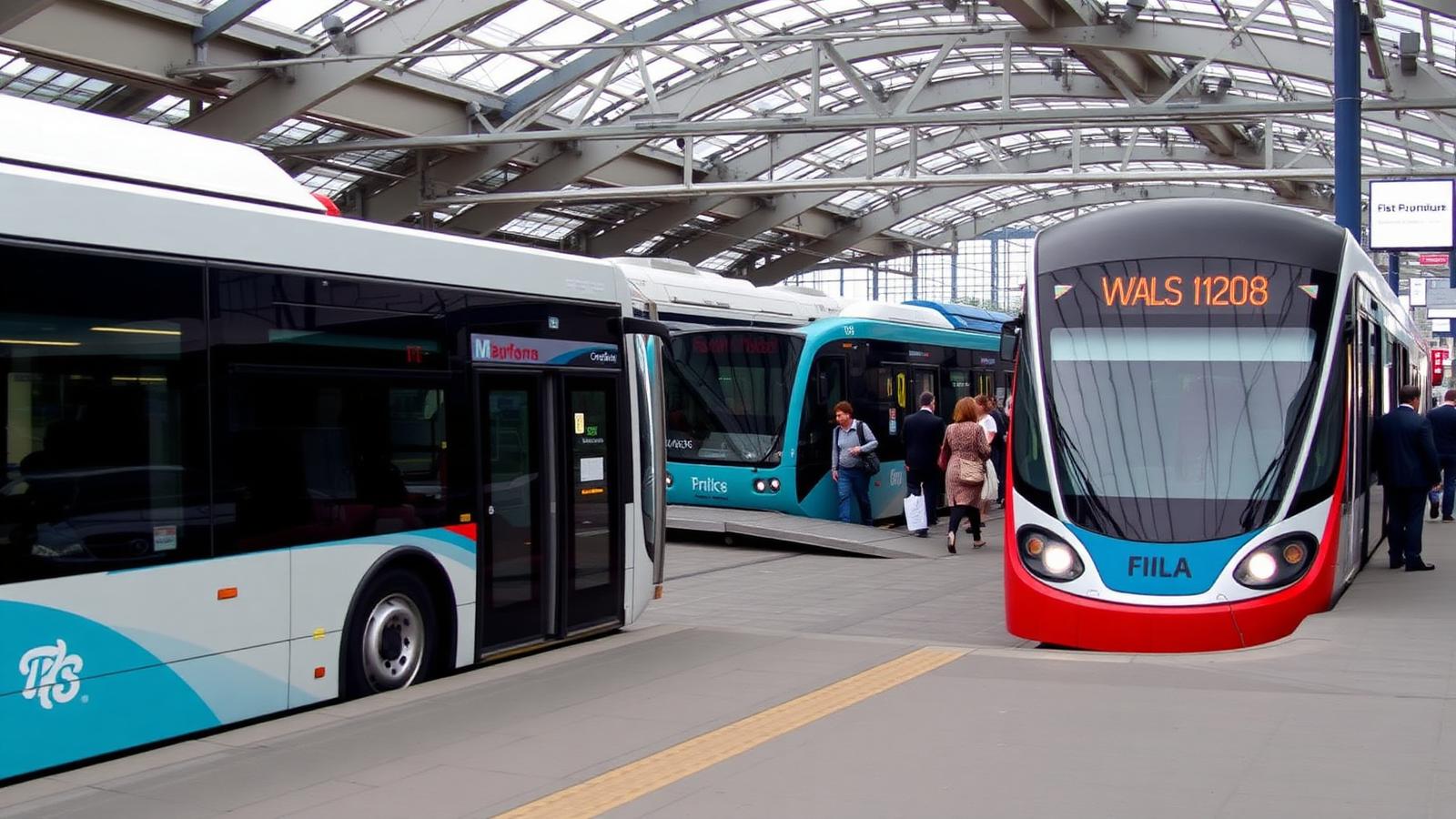
Touch 'n Go runs almost everything — get one in your first week
Malaysia's public transport, tolls, parking and even some retail payments run on a single card ecosystem centred on Touch 'n Go (TnG), alongside a genuinely useful MRT/LRT/Monorail/KTM rail network in Kuala Lumpur and Grab as the default ride-hailing app everywhere. Figures below are approximate at roughly 1 RM ≈ ৳29 and fares are revised periodically — verify current prices with MyRapid, Prasarana and KTMB before budgeting.
Touch 'n Go card and eWallet — the backbone of Malaysian transport
Almost every form of public transport payment in Malaysia, and most highway tolls, run through the Touch 'n Go card or its companion eWallet app.
A physical Touch 'n Go (TnG) card costs around RM 10 (≈ ৳290) and can be bought and reloaded at train stations, convenience stores (7-Eleven, KK Mart) and via the TnG eWallet app, which also supports e-money transfers, bill payments and QR payments at many retailers. Get one in your first week — you tap in and out at MRT, LRT, Monorail and most bus fare gates with it, and you'll also need it (or the eWallet linked to a vehicle) if you ever ride in a car using Malaysia's tolled highways. Top-ups can be done by cash at station kiosks, via the app linked to a Malaysian debit/credit card, or through reload machines at most rail stations.
MyRapid My50 — the unlimited monthly pass that changes your transport budget
If you commute daily by rail or RapidKL bus, the My50 unlimited monthly pass usually beats paying per trip within a few weeks.
| Fare option | Cost | Best for |
|---|---|---|
| Single MRT/LRT trip (KL) | RM 1–7 depending on distance | Occasional or off-campus trips |
| MyRapid My50 (unlimited monthly) | RM 50/month (≈ ৳1,450) | Daily commuters riding RapidKL rail and bus regularly — pays for itself quickly for most students |
| MyRapid My100 (unlimited, wider network incl. some KTM/express) | RM 100/month (≈ ৳2,900), verify current network coverage | Students commuting across a wider combined rail/bus network |
The My50 pass covers unlimited rides on RapidKL-operated rail lines and buses within a calendar month, making it the default recommendation for any student commuting daily between a rented room and campus by rail. Confirm current pricing and exactly which lines/operators are included on myrapid.com.my, since RapidKL periodically adjusts pass coverage and price.
MRT, LRT, Monorail and KTM Komuter — how KL's rail network fits together
Kuala Lumpur's rail system is actually four separate but interconnected networks, each run differently, which confuses most new arrivals in their first month.
| Line type | Operator | Useful for |
|---|---|---|
| MRT (Mass Rapid Transit) | Prasarana/RapidKL | Newer, longer cross-city lines — Kajang Line and Putrajaya Line connect suburbs like Cyberjaya-adjacent areas and Kajang to the city centre |
| LRT (Light Rail Transit) | Prasarana/RapidKL | Ampang, Sri Petaling and Kelana Jaya lines — dense inner-city and Petaling Jaya/Subang coverage |
| KL Monorail | Prasarana/RapidKL | Short inner-city loop connecting KL Sentral, Bukit Bintang and Titiwangsa — useful for shopping/entertainment districts |
| KTM Komuter | KTMB | Longer-distance commuter rail reaching further-out towns and some university areas outside central KL, often cheaper per km than MRT/LRT |
All four accept Touch 'n Go for tap-in/tap-out fares, and KL Sentral is the main interchange hub connecting most of them along with KLIA Ekspres to the airport. Use apps like Moovit or Google Maps (both reliable for KL transit routing) to plan multi-line journeys, since transfers between MRT/LRT/Monorail and KTM sometimes require walking between separate station entrances rather than a single integrated platform.
Grab — the default ride-hailing app, and when it makes sense
Grab dominates ride-hailing in Malaysia the way Uber does in many Western cities, and it's often the practical choice late at night or for door-to-door trips rail doesn't reach.
A short Grab ride within KL typically runs RM 8–15 (≈ ৳232–435), rising with distance, time of day and demand-based surge pricing — always check the fare estimate in-app before confirming. GrabFood and GrabMart extend the same ecosystem to food and grocery delivery, both genuinely useful once you're settled into student housing. For daily campus commuting, rail plus the My50 pass is far cheaper than routine Grab use — treat Grab as your fallback for late nights, heavy luggage days, or routes without good rail coverage rather than your default commute.
Campus shuttles — check before you commit to distant housing
Many Malaysian universities, especially those with large or semi-suburban campuses, run their own free or subsidised shuttle services connecting nearby residential areas, LRT/MRT stations and the campus.
Universities like Sunway, Taylor's, Monash Malaysia and UCSI run shuttle routes between their campuses and nearby transit hubs or popular student residential areas — check your specific institution's shuttle timetable before assuming you'll rely purely on public rail or Grab, since a well-timed shuttle can eliminate a daily transport cost entirely.
Choosing housing by rail line — the single biggest transport decision you'll make
Where you rent matters more for your transport budget and daily sanity than almost any other single choice.
- ✓Check which rail line actually serves your campus
A room a 5-minute walk from an MRT/LRT station on the same line as your university saves both money (via My50) and the daily stress of transfers or Grab costs.
- ✓Avoid choosing housing on price alone before checking transit
A cheaper room far from any rail line can end up costing more overall once daily Grab or bus fares are added, plus lost commute time.
- ✓Confirm your university's specific campus shuttle stops
Some shuttle stops only serve certain condos or specific LRT/MRT stations — ask before signing a lease assuming shuttle access.
- ✓Factor in the walk from station to accommodation, not just the line
KL heat and sudden downpours make a 20-minute walk from the nearest station meaningfully worse than it sounds on a map.
Intercity travel — buses and ETS trains
Travelling between Malaysian cities (KL to Penang, Johor Bahru, Ipoh or further) is cheap and comfortable by both express bus and the ETS (Electric Train Service).
| Route (approx.) | Bus (express coach) | ETS train |
|---|---|---|
| KL → Penang (~4–5h bus / ~3h ETS) | RM 40–60 (≈ ৳1,160–1,740) | RM 60–90 (≈ ৳1,740–2,610) |
| KL → Ipoh (~2.5h bus / ~1.5–2h ETS) | RM 20–35 (≈ ৳580–1,015) | RM 30–50 (≈ ৳870–1,450) |
| KL → Johor Bahru (~4–5h bus) | RM 30–45 (≈ ৳870–1,305) | No direct ETS — KTM Komuter/intercity connections apply |
Book express coaches via easybook.com or CatchThatBus, and ETS tickets directly via KTMB's app or website — both get busy around festive periods (Hari Raya, Chinese New Year) so book ahead. These figures are approximate and shift with fuel prices and operator promotions — verify current fares before planning a trip.
Motorbike and car realities for international students
Owning a vehicle is common among Malaysians but comes with real friction for international students that's worth understanding before committing to it.
A Malaysian driving licence conversion or a valid international driving permit is required to legally ride or drive, and traffic in KL and Penang can be genuinely heavy at peak hours. Motorbike ownership is common among students needing to reach suburban campuses cheaply, but comes with real road-safety risk in Malaysian traffic conditions and the added cost of insurance, road tax and parking. For most Bangladeshi students living within reach of the rail network, public transport plus occasional Grab is simpler, cheaper and lower-risk than owning a vehicle — reserve car/motorbike ownership for students in genuinely rail-poor areas (some parts of Cyberjaya, Iskandar EduCity or Kuching) where it becomes close to a necessity.
Verify current fares and pass coverage
Want this decided for you, not just explained?
Your personalised blueprint picks the exact course, university, city and PR route for your grades, budget and career — with every cost in taka. From ৳390 for one full assessment.
Related Malaysia guides
Read these next — universities, courses, cities and the residence route all feed into the same decision.
Best 10 Malaysian universities — public, private and branch campuses
UM, UPM, UTM, Monash Malaysia, Nottingham Malaysia, Taylor's, Sunway, APU and the colleges you must avoid.
Before you choose · 9 minCourse list by tier — degrees that pay off vs degrees that don't
Which MQA-accredited Malaysian programmes lead to KL tech, finance and engineering jobs, and which diplomas waste your money.
Before you choose · 9 minBest 5 Malaysian cities for Bangladeshi students
Kuala Lumpur, Petaling Jaya, Cyberjaya, Penang and Johor Bahru compared on rent, tuition, internships and graduate jobs.
Before you choose · 10 minGraduate Pass, Employment Pass and Residence Pass-Talent explained
How the Student Pass, 12-month Graduate Pass, EP I/II salary bars and the 10-year RP-T actually connect — and what Malaysia can't give you.
After you land · 8 minFinding a room in Malaysia — hostels, condos and deposit traps
Campus hostels vs shared condos, iBilik and Mudah listings, two-plus-one deposits, utilities and the agent scams to avoid.
After you land · 8 minWorking on a Student Pass — the 20-hour holiday-only rule
Exactly when you may work, which sectors are allowed, realistic pay, internships that count, and why work can't fund your degree.