
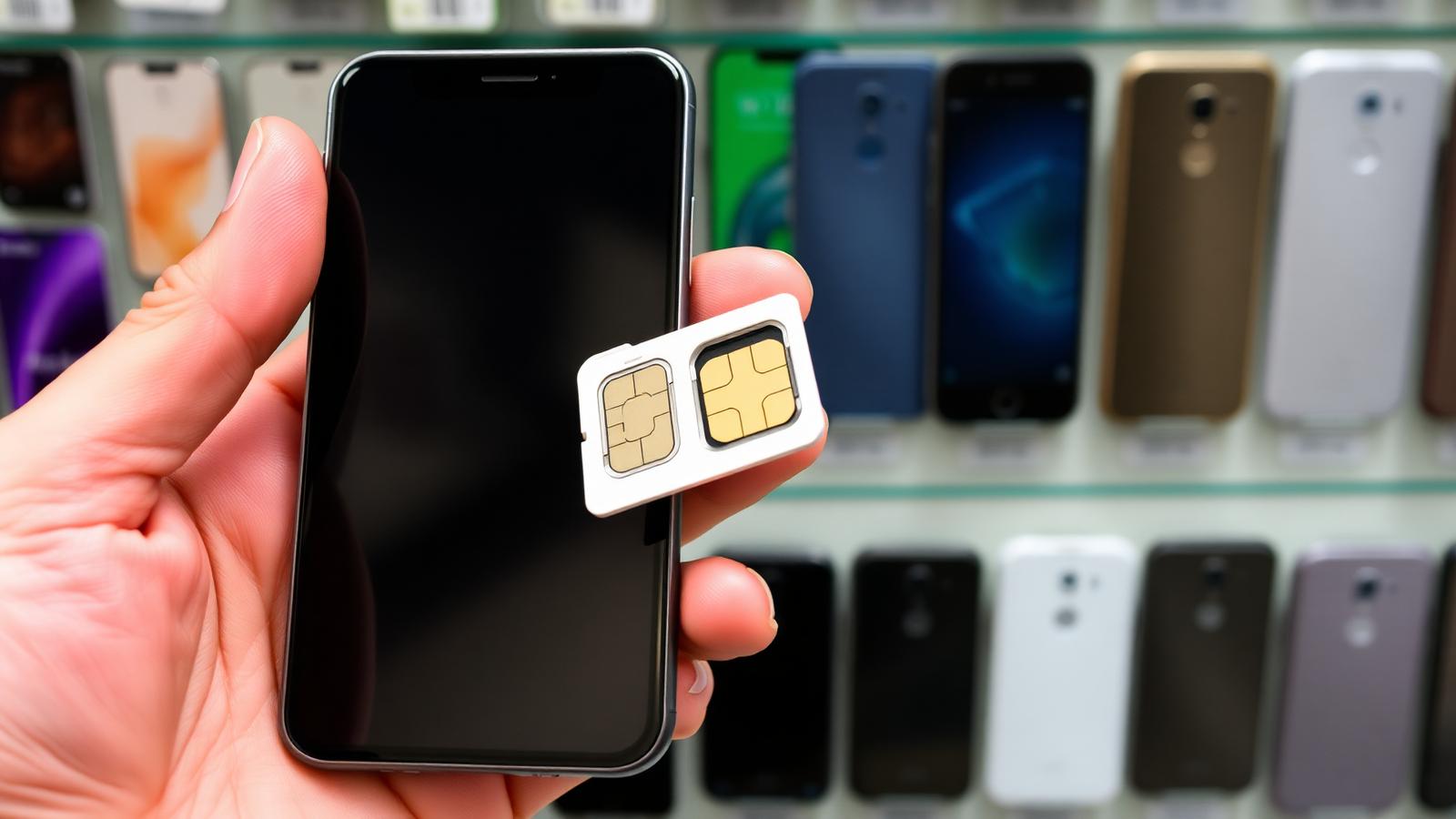
Get connected before you land, if you can
An Australian number is needed almost immediately — for your bank, university portal, Uber, and even the airport transfer you book. An eSIM activated before departure means you land with data already working; otherwise, every major airport has SIM kiosks in arrivals. Prices below are indicative — check current plans directly.
The big networks vs the budget brands
| Provider | Network | Typical monthly plan | Best for |
|---|---|---|---|
| Telstra | Own network — best coverage nationally | A$40–65 | Regional/rural areas, most reliable overall |
| Optus | Own network — strong in cities | A$30–50 | Good balance of price and coverage in metro areas |
| Vodafone (TPG) | Own network — city-focused | A$25–45 | Cheapest of the big three, weaker outside cities |
| Amaysim / Belong | Runs on Optus / Telstra towers | A$15–35 | Same coverage as parent network, cheaper plans |
| Boost Mobile | Runs on Telstra's network | A$20–40 | Telstra-level coverage at a lower price |
| Kogan Mobile | Runs on Vodafone/Telstra network | A$8–25 | Cheapest overall for light data users |
The budget brands (Amaysim, Belong, Boost, Kogan) resell capacity from the big three networks, so you often get near-identical coverage for significantly less. Check which parent network they use in your specific city or campus town before committing.
Coverage vs price — what actually matters
If you live and study entirely within a capital city, price should drive your decision. If you're in a regional town or plan road trips, coverage matters more.
Telstra covers the most regional and remote areas by a clear margin, which matters if your campus, part-time job or a future trip takes you outside the inner city. Inside Sydney, Melbourne, Brisbane, Perth or Adelaide, Optus and Vodafone-based budget plans usually perform just as well for a fraction of the price.
Setting up in the right order
A little planning avoids being locked out of banking apps or OTP codes mid-flight.
- 1
Unlock your phone in Bangladesh
Do this before you fly — unlocking from overseas after arrival is slower and sometimes requires contacting your Bangladeshi carrier directly.
- 2
Activate an eSIM before departure (optional but convenient)
Airalo, Holafly or the carriers' own eSIM products let you land with data working immediately — useful for maps, ride-hailing and messaging family on arrival.
- 3
Buy a physical prepaid SIM at the airport or a convenience store
Photo ID (passport) is required by law to activate any Australian SIM. Buy the smallest starter pack first; switch to a better-value plan once you know your usage.
- 4
Keep your Bangladeshi SIM alive
Keep it topped up with the minimum recharge, or hand it to a family member to keep active — bKash, Nagad and Bangladeshi bank OTPs still go to that number, and many services won't let you change the registered number remotely.
- 5
Move two-factor authentication over carefully
Update WhatsApp, Facebook, Google and any accounts that support it to your Australian number or an authenticator app, while keeping the Bangladeshi SIM active as a fallback during the transition.
- 6
Register your Australian number everywhere important
Bank, university portal, Medicare/OSHC provider and landlord — on day one, since most onboarding steps depend on it.
Calling and texting Bangladesh
Video calling over WiFi is free; the main cost trap is international calling add-ons you don't need.
WhatsApp, Messenger and IMO calls over WiFi or mobile data cost nothing beyond your existing data plan. If you do need to call Bangladeshi landlines or numbers without smartphones, check your provider's international call rates — some budget SIMs include a bundle of minutes to Bangladesh, while others charge A$0.50–1.50 per minute without one.
Roaming as a backup, not a habit
Avoid a 24-month phone contract in your first month
Want this decided for you, not just explained?
Your personalised blueprint picks the exact course, university, city and PR route for your grades, budget and career — with every cost in taka. From ৳390 for one full assessment.
Related Australia guides
Read these next — universities, courses, cities and the residence route all feed into the same decision.
Best 10 Australian universities — entry, fees and outcomes
Group of Eight vs the smart mid-tier and regional picks, with realistic entry bars, tuition in AUD and BDT, and who each one actually suits.
Before you choose · 9 minCourse list by tier — from PR-gold to avoid
Every popular Australian course sorted Tier 1 to Tier 4 by PR value, job demand and cost — so you don't spend 40 lakh on a dead-end qualification.
Before you choose · 8 minBest 5 cities in Australia for Bangladeshi students
Rent, part-time work, graduate jobs, regional points and PR odds for Adelaide, Perth, Brisbane, Melbourne and Sydney.
After you land · 8 minHow to find a rental in Australia (and not get scammed)
Sharehouse vs lease, bond and rental ledger rules, the inspection script that wins agents over, and the scams that target new arrivals.
After you land · 8 minPart-time work — 48 hours a fortnight, used properly
Where the jobs really are, award wages and casual loading, the Australian resume format, and how to turn a casual job into a graduate reference.
After you land · 7 minGetting around — Opal, Myki, Go Card and your first car
City-by-city travel cards, which states give students concession fares, monthly cost in BDT, and converting your Bangladeshi driving licence.